Claude Code agent teams, and teams that mix agents and people
Claude Code's agent teams let a lead session split work across Claude teammates. How to turn them on, what they cost, and how Mirasim mixes Codex and people in.
The short answer
Agent teams are an experimental Claude Code feature from Anthropic, off by default. One session acts as the team lead: it splits the work, assigns tasks and pulls the results together. The teammates are other Claude Code sessions, each with its own context, sharing a task list and messaging each other directly.
- Turn it on
Set CLAUDE_CODE_EXPERIMENTAL_AGENT_TEAMS=1 in settings.json or the environment
- Ask for a team
In an interactive session, the lead spawns teammates and hands out tasks
- Split the files
Teammates share one checkout, so give each its own part
Anthropic notes that agent teams use significantly more tokens than a single session, and work best when teammates can operate independently.
Claude Code's five ways to run agents in parallel
| What it is | Use it when | |
|---|---|---|
| Subagents | Workers inside one session that report a summary back | A side task would flood your main conversation |
| Agent view | One screen to dispatch and watch background sessions (claude agents); research preview | You have several independent tasks to hand off |
| Agent teams | A lead plus teammates with a shared task list and messaging; experimental, off by default | Claude should split a project and keep the workers in sync |
| Dynamic workflows | A script that runs many subagents and cross-checks their results | The job is too big for a handful of subagents |
| Projects | One ongoing conversation at claude.ai/code or in the desktop app that starts parallel threads | You want Claude to coordinate a longer body of work |
In every one of these, the workers are Claude sessions. Anthropic's guide points to MCP for bringing another tool in.
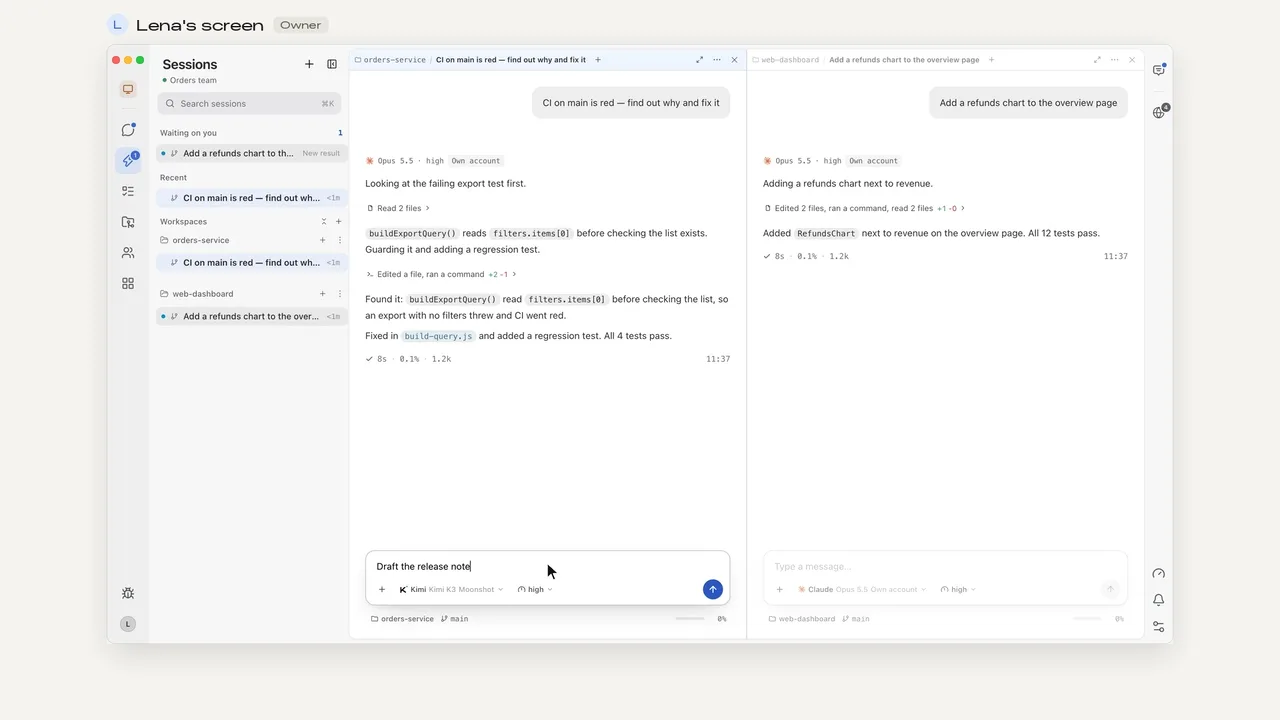
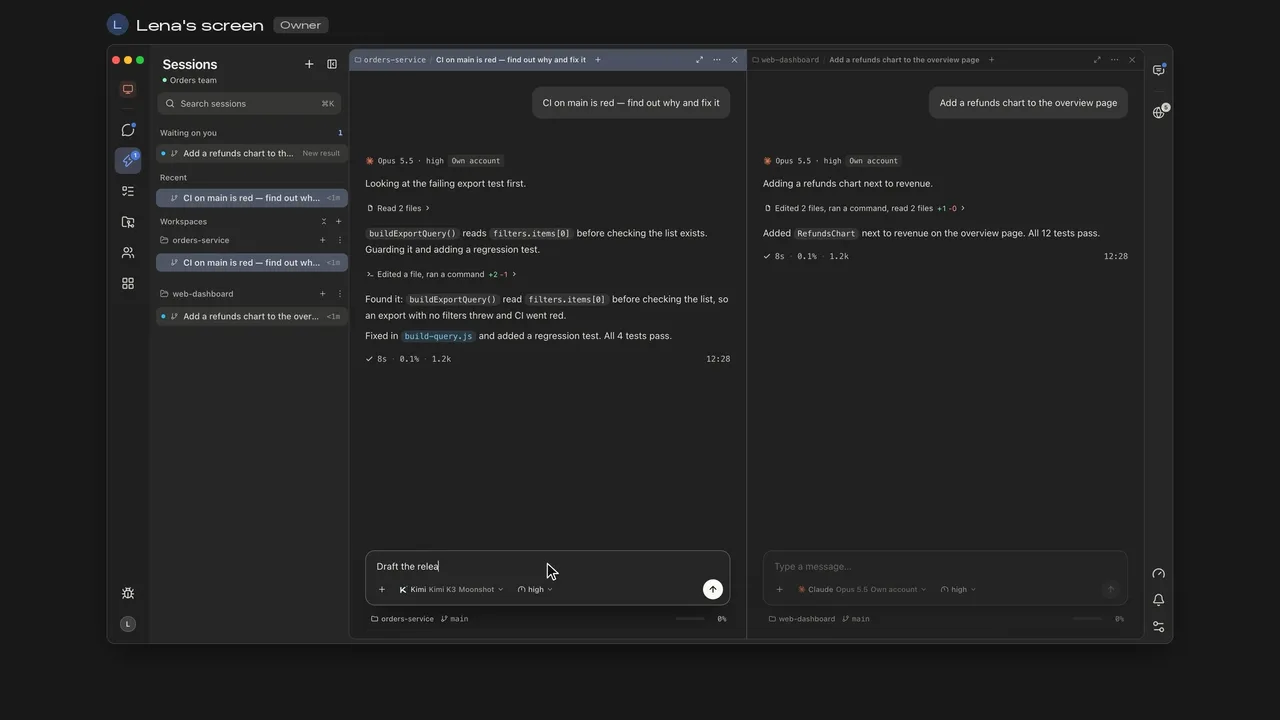
Teams that mix agents and people, in Mirasim
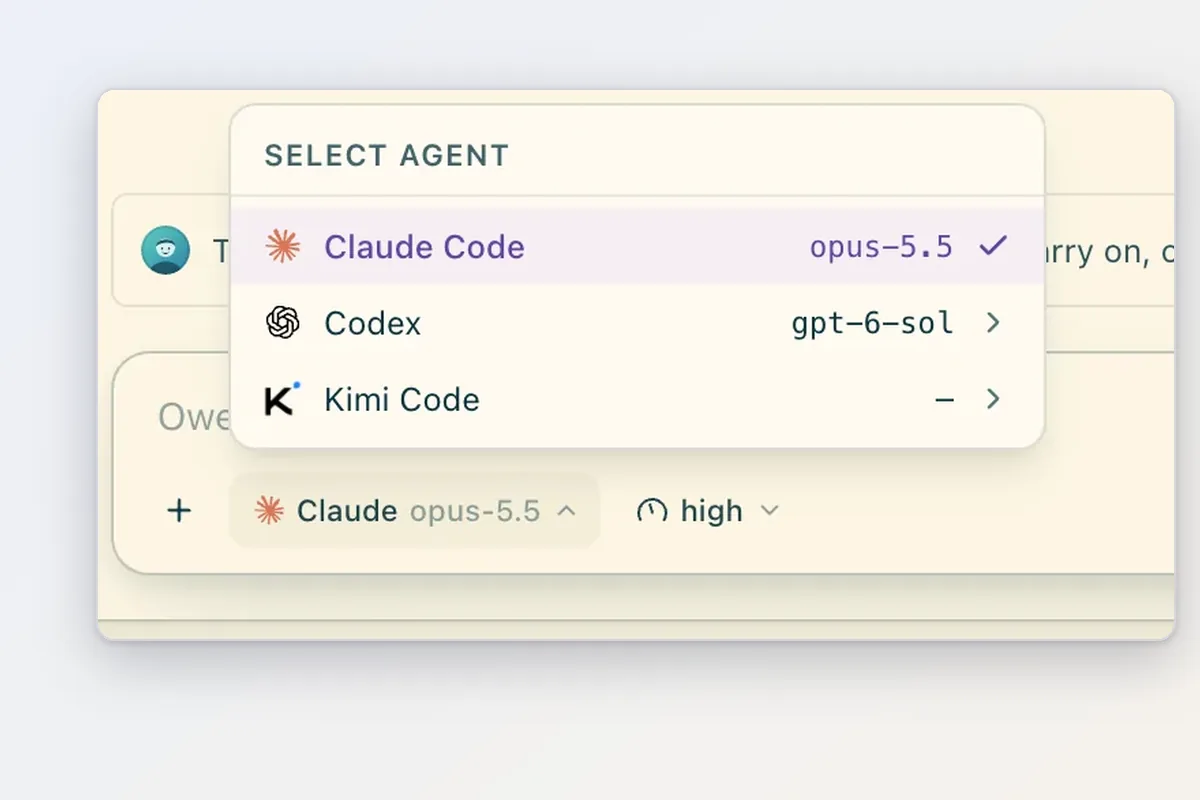
- A Codex sessionStarted with the agent and model the task needs
- A Kimi Code sessionRead where it has got to, or send it a message
- A teammate's sessionIn a team space, people steer sessions too
- Each parallel session can start in its own git worktree, so sessions don't overwrite each other's files.
- In a team space, several people send into the same session, each message signed with its sender.
- Every session, whichever agent runs it, is in one sidebar.
Questions
- Are agent teams on by default?
- No. They're experimental; set CLAUDE_CODE_EXPERIMENTAL_AGENT_TEAMS to 1 to turn them on. Teammates are only spawned in interactive sessions, not with
-p. - What's the difference between subagents and agent teams?
- Subagents work for one session and report a summary back. Agent teams are separate sessions that share a task list and message each other, which costs more tokens.
- Can an agent team include Codex?
- Not in Claude Code: its teammates are Claude sessions. In Mirasim, a Claude Code session can start or message a Codex session through session messaging.
- Do teammates get their own worktree?
- Anthropic's guide says agent teams don't isolate teammates in worktrees, so split the work so each teammate owns different files.
Article · Running two coding agents in one repository → Running parallel agents in separate git worktrees.
Article · Claude Code for teams: access, shared setup, and working in one session → Claude Code for a team of people: access, shared setup, shared sessions.
Article · Subagents in Claude Code and Codex: what they are and how to make your own → Not a team, just a helper for one side task? Subagents in Claude Code and Codex.
Sources
Agent teams and Claude Code's other parallel options were checked against Anthropic's documentation on November 8, 2026: code.claude.com/docs/en/agent-teams and code.claude.com/docs/en/agents. The feature is experimental and changes quickly, so check those pages for the latest.
Keep reading
Code review with Claude Code and Codex: /review, GitHub reviews and a second opinion
Code review with Claude Code and Codex: /review for local changes, automatic GitHub PR reviews, where review rules go, and a second opinion from the other agent.
Hooks in Claude Code and Codex: run your own commands when the agent acts
What hooks are in Claude Code and Codex, where they go, when they fire, and examples: a notification, formatting after edits, blocking edits to protected files.
Claude Code and Codex permission modes: auto, plan, --dangerously-skip-permissions and --yolo
What each Claude Code and Codex permission mode allows without asking, what --dangerously-skip-permissions and --yolo turn off, and safer ways to get fewer prompts.